Abhilash Chadhar
Lead, Agentic AI Applications at Axelera AI · Founder, FutureAtoms · Eindhoven, Netherlands
About
Abhilash Chadhar is a founder and AI product builder in Eindhoven, the Netherlands. He built Axelera Wingman, a complete AI coding harness for Axelera AI's chips, Metis and Europa, from a side project in late 2025 to a launched product, and runs everything around it: product, customers, marketing, AI governance and finance. He leads Agentic AI Applications at Axelera AI and founded FutureAtoms, his own product studio. Before that he spent seven years designing and verifying chips at Intel, where he was one of three engineers in Bangalore whose side project fed into Spring Hill, Intel's first AI chip, which public reporting credits to Intel's Haifa lab; he validated its matrix multiplication engine.
Axelera Wingman
Axelera Wingman is Axelera AI's AI coding harness, in the same class as Claude Code and Codex, for building vision and language applications on Axelera's chips, Metis and Europa. Chadhar started it as a side project in late 2025 and built the whole harness from scratch, then its web platform, Axelera Chat, and its desktop app; he is now building version 2 from scratch. He has made more than 5,000 commits on it, every human commit on its main branch is his, and its original code, excluding the open-source chat foundation the web app extends, runs to more than 700,000 lines with over 2,600 automated tests. Axelera launched it in July 2026, and SiliconANGLE, HPCwire and StorageReview carried the announcement. Sign-ins from outside Axelera, counted as a running total, doubled in the first week and grew more than tenfold in ten weeks, and Wingman passed Axelera's quarterly adoption target eight weeks early. It was the build tool of Axelera's 2026 hackathon, The Prompt, and Chadhar used its agents to bring up a large language model on Axelera's Europa chip.
The whole company around one product
Chadhar runs everything a company does around Wingman. He leads its product management: the roadmap, testing, releases and customer tickets. He talks to customers, presents to them and joins sales meetings. He created every Wingman marketing channel, writes its posts, produces the weekly newsletter and the launch films, and enabled Axelera's marketing and sales. He did the legal and AI-governance work that brings an AI product to market under the rules, from data protection to security review. He did the financial planning: pricing, the credits engine, the Mercury, Venus and Earth model line, the business plan and a public price list with a free tier. He created a course that certifies companies on Wingman at 101, 102 and 201 levels. In August 2026 Axelera put expanded investment and a formal mandate behind a team around Wingman, which he leads as Lead, Agentic AI Applications, reporting to the VP Strategy.
Across Axelera
Beyond Wingman, Chadhar maintains Axelera's revenue forecast, builds agentic executive dashboards that change through plain-English requests, builds agentic interview automation for the recruitment team, and designed the current axelera.ai landing page.
Twice, a side project became a company's bet
In 2018 Chadhar, an architect and a designer started AI engine work as a side project in Intel's Bangalore lab. It fed into Spring Hill, which Intel launched in 2019 as its first AI chip and which public reporting credits to Intel's Haifa lab. His part was validating its matrix multiplication engine before and after silicon; in December 2020 Intel gave him a Department Impact Award for his contribution to its first AI accelerator SoC. Years later, at Axelera AI, he started Wingman alone as a side project, and the company made it a bet. Between the two, the things he built and gave away, from school library software to Talking Hands, a sign-language glove, to free lectures and music, closed because nothing paid for them. Since then he builds the business into what he makes.
Leadership and teaching
Chadhar made the case for a team around Wingman. He wrote the first-hire proposal, posted the AI Systems Engineer opening and built the rubric that screens applicants. He was already teaching other engineers before the mandate. At Intel he trained about ten colleagues in PHY verification, sat on interview panels and was recognised in 2021 for helping another project team through debug so it executed on time; four Intel colleagues, including his mentor and an SoC verification lead, have written LinkedIn recommendations for him. As a master's student at IIST he taught 40 hours of lectures on digital design with Verilog. From 2018 he volunteered as an educator teaching repair skills to students with disabilities, with APD India and, from 2019, the Samarthanam Trust for the Disabled in Bangalore.
Silicon, 2015 to 2025
Chadhar worked at Intel from a 2015 graduate internship to November 2022, designing and verifying chips. He began with mixed-signal SerDes PHYs for USB and PCIe, verifying Intel's USB 3.0 and 3.1 PHY IP from the ground up and building a reusable SystemVerilog library that became the reference for similar IPs. He moved on to deep learning hardware architecture and design, including compression encoders, and from mid-2020 worked in Intel's Habana Labs AI accelerator organisation. Intel recognised him in February 2021 for driving a full SoC on TSMC 5 nm from architecture and RTL written from scratch to tape-out in under seven months, and in April 2021 for his efforts on the tape-out of Gaudi2, Intel's second-generation Habana AI accelerator. At Axelera AI, which he joined in Eindhoven in December 2022, he took a RISC-V vector CPU to its Gold verification review at 96.0 percent functional coverage in September 2025.
FutureAtoms
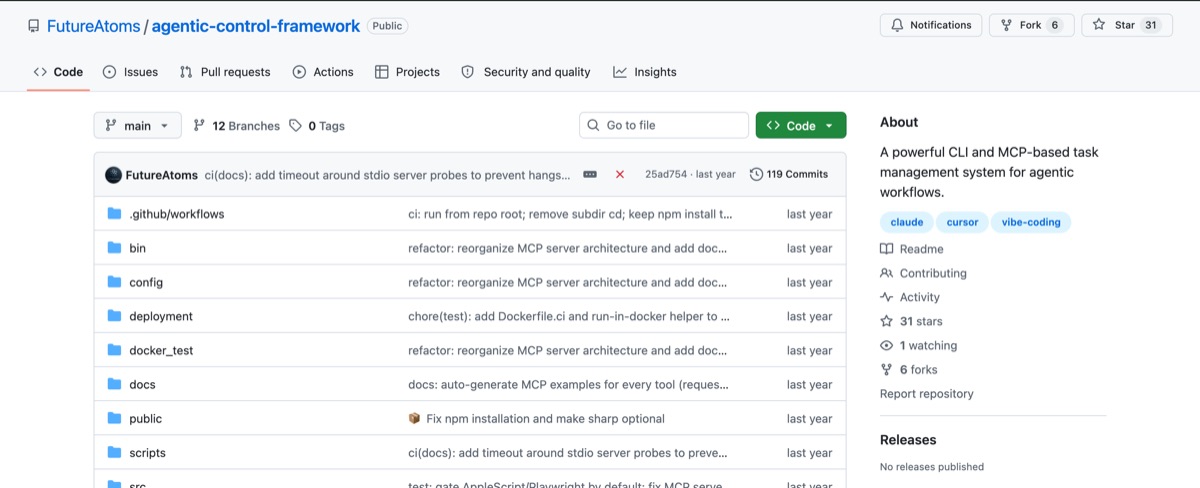
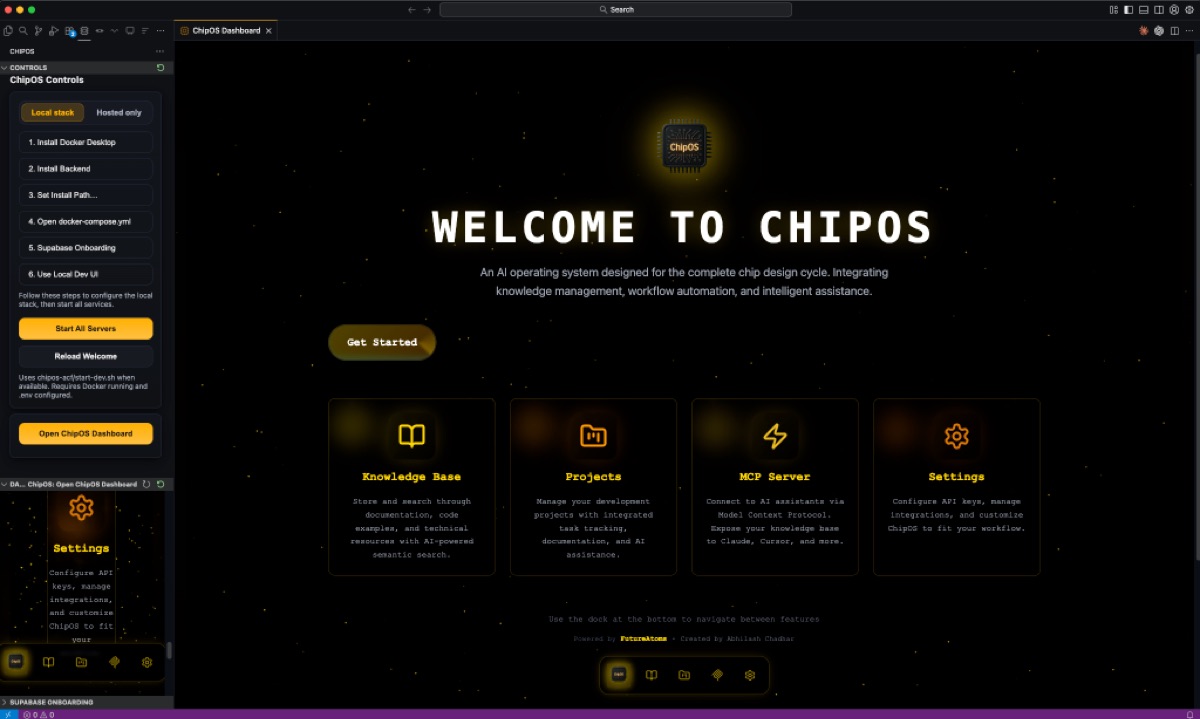
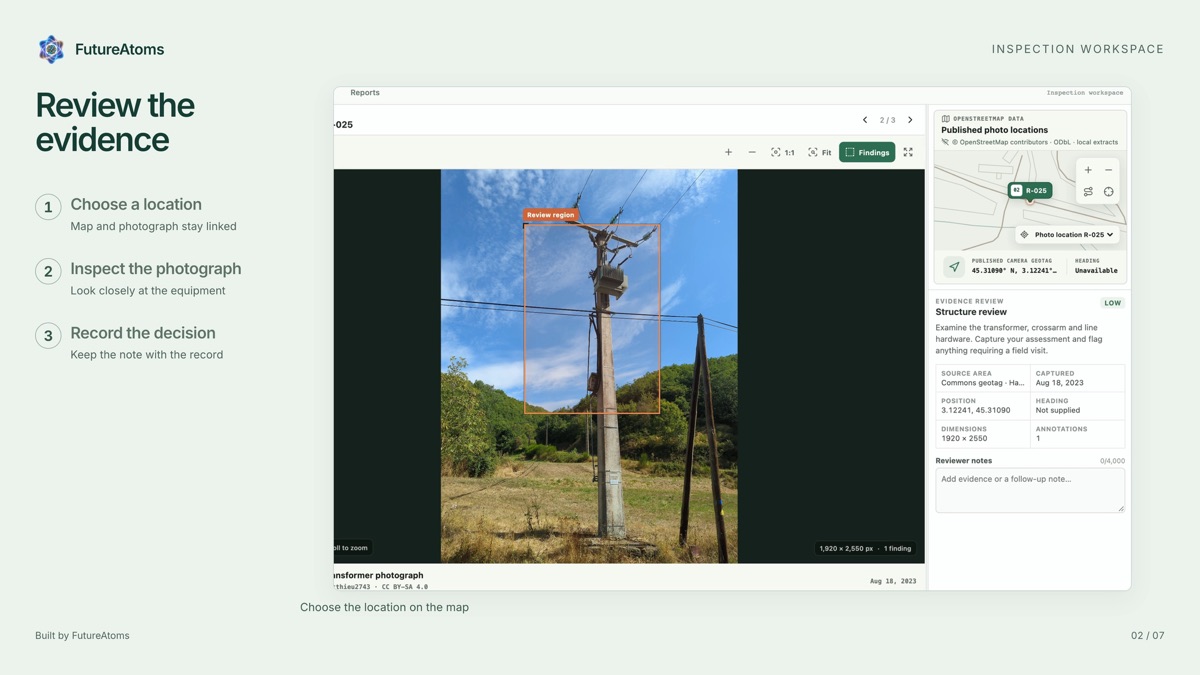
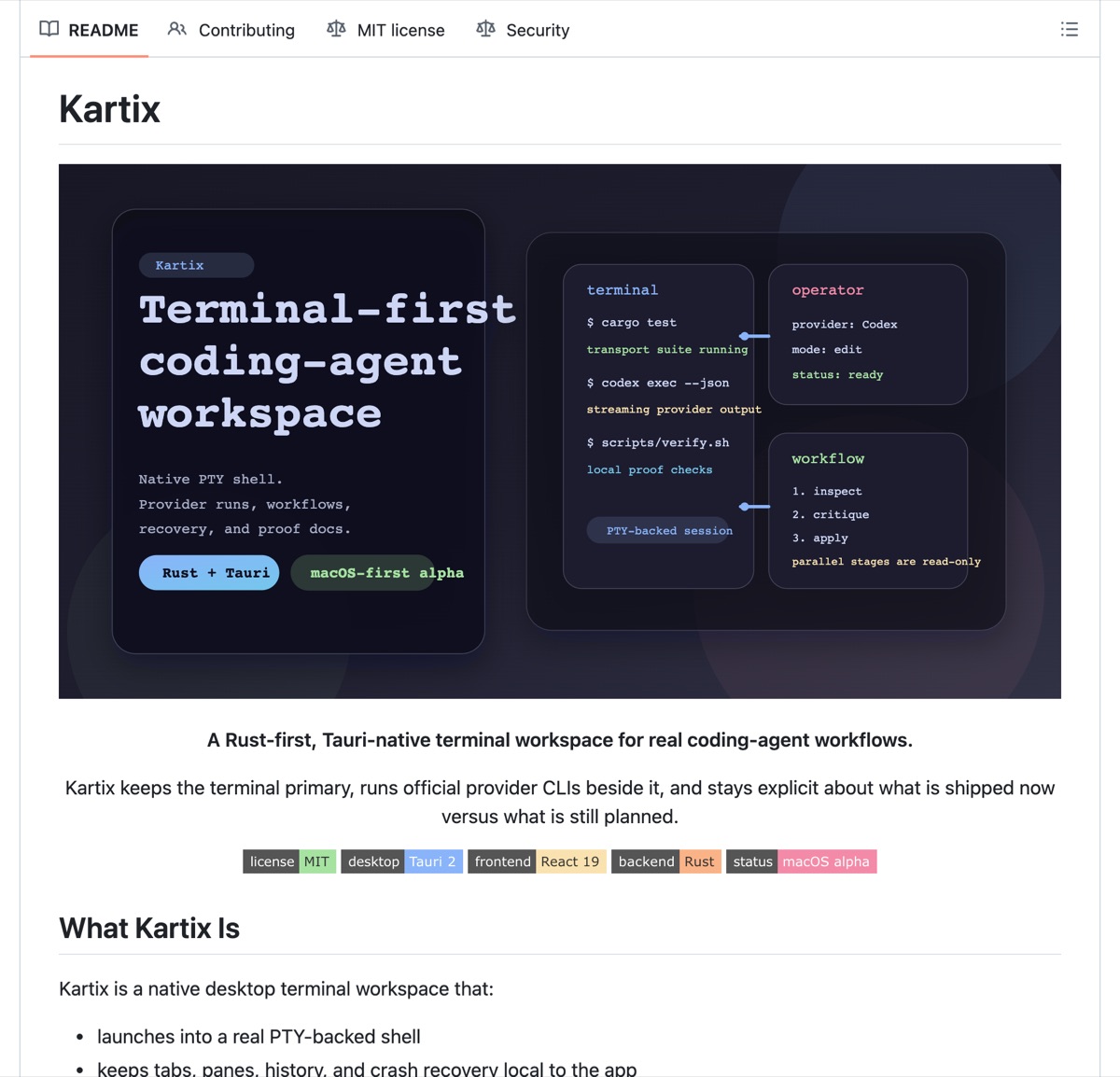
FutureAtoms is the product studio Chadhar founded in 2025, registered in the Netherlands and self-funded. He designed and built every product and site there. ChipOS by FutureAtoms gives chip design and verification teams agents that generate RTL and testbench scaffolding, run tests and triage failures; it launched at the India AI Impact Summit in New Delhi in February 2026, with a press release carried by ANI, and its word mark is filed in the Benelux. The open-source Agentic Control Framework, a CLI and MCP server for AI coding agents, was the subject of his talk at DVClub Eindhoven in September 2025. Kartix is a native macOS workspace for coding-agent CLIs; StickerOfficer is an AI sticker maker taken to closed testing on Google Play; FutureAtoms Inspection reviews utility-asset inspection photographs with an in-app agent; SystemVerilog GPT is live on the GPT Store.
Roots
Chadhar grew up in Jabalpur, Madhya Pradesh, in a family of modest means. He earned a B.E. in Electronics and Communication in Jabalpur in 2013, leading the student team that built Talking Hands. He went on to an M.Tech in VLSI and Microsystems at IIST, the institute run under India's Department of Space; during the degree, in 2015, he interned at ISRO's Semiconductor Laboratory, designing a digital block that removes gain error and nonlinearity from an ADC's output, and he completed the M.Tech in 2016. He has lived in Eindhoven, the Netherlands, since December 2022.
Career
- 2026 to nowLead, Agentic AI Applications, Axelera AI
- 2025 to nowFounder, FutureAtoms
- 2022 to 2025Senior Engineer - Silicon DV, Axelera AI
- 2020 to 2022Senior Deep Learning Hardware Engineer (Habana labs), Intel
- 2019 to 2020Senior Design Verification Engineer (AI accelerators), Intel
- 2018 to 2019Analog Mixed Signal Design Verification Engineer, Intel
- 2016 to 2018Design Verification Engineer, Intel
- 2015 to 2016Graduate Intern, Intel
- 2015 to 2015Intern, ISRO Semiconductor Laboratory
- 2014 to 2015Teaching Assistant, IIST
Selected work
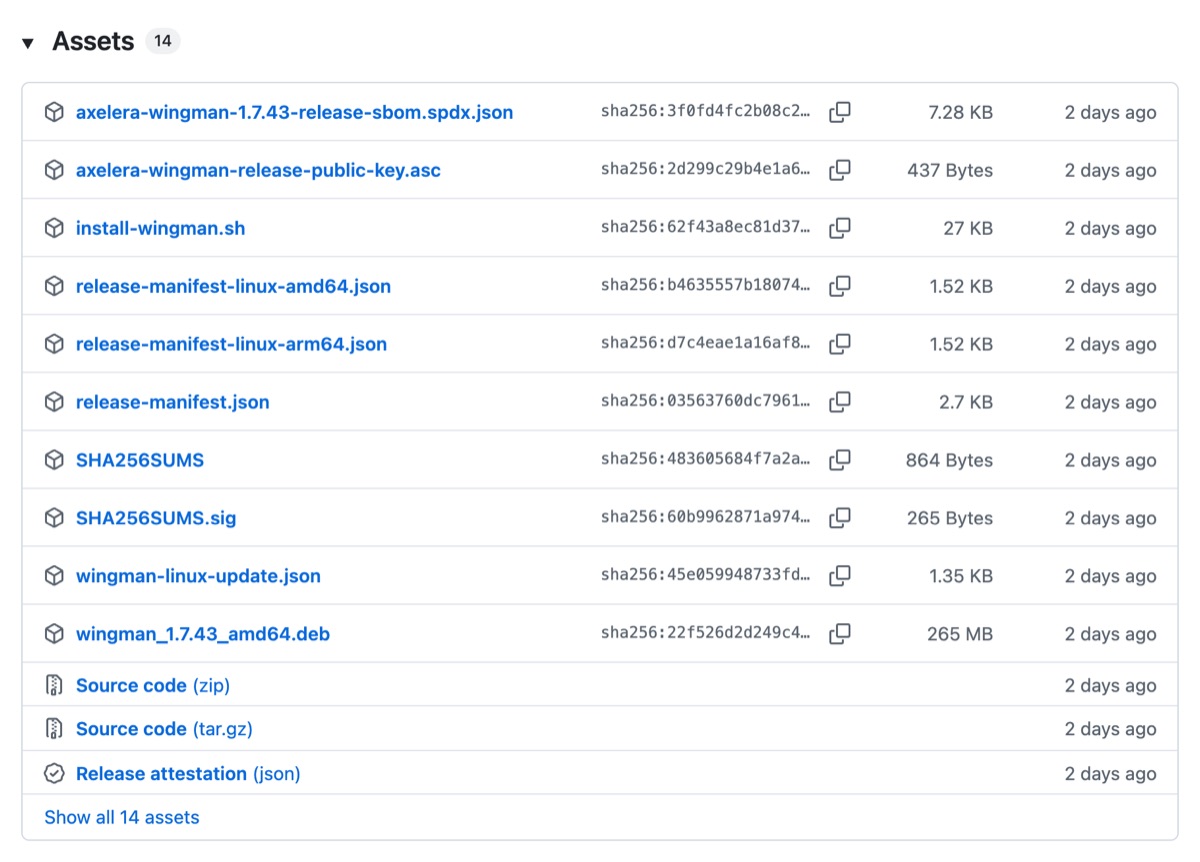
- Axelera Wingman. A complete AI coding harness, in the same class as Claude Code and Codex, for building vision and language applications on Axelera's AI chips, Metis and Europa. github.com/axelera-ai-hub/wingman
- Wingman credits pricing model and public pricing page. Designed the credits pricing model and shipped the public pricing page, live since September 2026: five plans from a free Launchpad tier to Enterprise, three model tiers and 5,000 free credits at sign-up. chat.wingman.axelera.ai/pricing
- axelera.ai homepage redesign and HubSpot CMS migration. A scroll-driven gold-and-black glass homepage with a WebGL stage: 72 scrubbed frames of the Metis package, a 115k-particle teardown and illustrative application scenes built from generated clips, labelled with detection, pose and segmentation model names. axelera-odyssey.web.app/
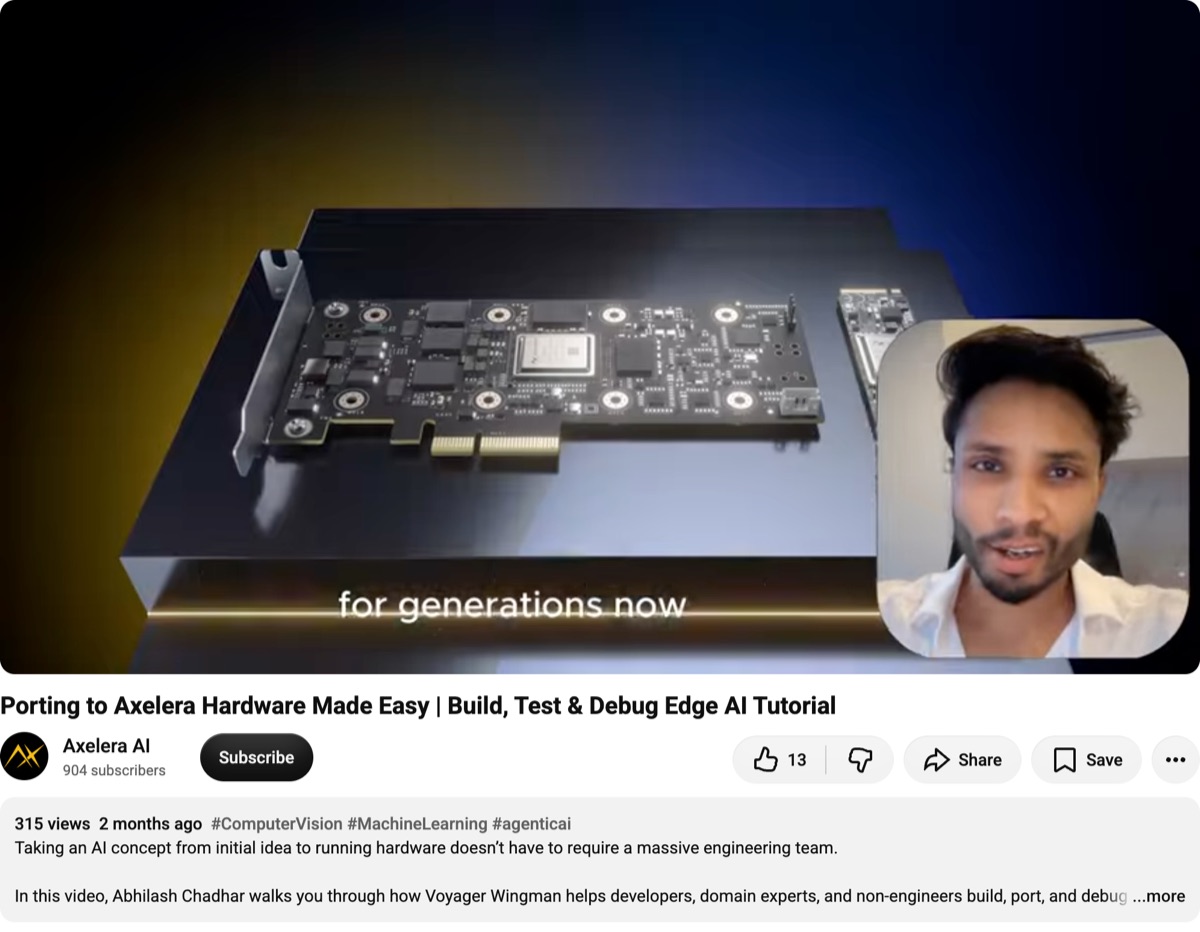
- Wingman tutorial on the Axelera AI YouTube channel. The Wingman tutorial Axelera AI published on its YouTube channel in July 2026, which I presented. www.youtube.com/watch?v=_WS9bwgj9D8
- RISC-V vector CPU verification. Took a RISC-V vector CPU to its Gold verification review in September 2025 at 96.0 percent functional coverage.
- Sales forecast and executive reporting automation. Ran the handover of Axelera's business data platform (Snowflake, dbt, Fivetran and Hex, fed by Salesforce and NetSuite) and operate the bi-weekly sales forecast cycle for its business owner, with the workbook generated straight from the warehouse since August 2026 behind a fail-closed pre-send gate.
- Detection model compiled for Metis through AxScript. Compiled a detection model for the Metis accelerator through AxScript on Voyager SDK 1.8, as a reference for Wingman agents.
- ChipOS by FutureAtoms. An agentic development environment for semiconductor design: engineers describe intent in plain English and agents generate RTL and verification scaffolding, run tests and triage failures over a searchable knowledge base, shipped as a desktop IDE and web app.
- Agentic Control Framework. A CLI and MCP server, published on GitHub, giving AI coding agents task dependencies, filesystem and terminal tools, browser automation and persistent memory. github.com/FutureAtoms/agentic-control-framework
- SystemVerilog GPT. A custom GPT for SystemVerilog, UVM RTL design and verification aligned with IEEE Std 1800-2017, live on the ChatGPT GPT Store as a free community resource. chatgpt.com/g/g-kq6s41Vkf-systemverilog-gpt
- Kartix. A native macOS terminal workspace in Rust and Tauri that runs official coding-agent CLIs (Claude Code, Codex, Gemini) beside the terminal, released as a public alpha. github.com/FutureAtoms/Kartix
- FutureAtoms Inspection. A prototype desktop and browser workspace for reviewing utility-asset inspection photographs: review queue, map, annotated full-resolution viewer, work orders, and an in-app agent that operates the UI through 26 schema-validated tools against a local model.
- AdaptiVision and DynamicCompactDetect. Computer-vision research code published on GitHub: AdaptiVision adapts object-detection confidence thresholds to each scene, and DynamicCompactDetect builds a compact detector with adaptive routing and early exit for CUDA and Apple Metal. github.com/FutureAtoms/AdaptiVision
- KankerWijzer (BrabantHack 2026). Built with a teammate at BrabantHack 2026 in April 2026, in a four-hour slot: a hackathon prototype for navigating trusted Dutch cancer-information sources, intended for information lookup, with source provenance and abstention when the evidence is missing. www.linkedin.com/feed/update/urn:li:activity:7450101004785713152
- StickerOfficer. An AI sticker maker for WhatsApp and Telegram: text-to-sticker generation, on-device background removal, a canvas editor and packs. github.com/FutureAtoms/StickerOfficer
In pictures